

CLAY CITY Residency
with Now. Make. Art
During CLAY CITY Residency, Teaching Artists use adaptive facilitation to engage students in building a collective city out of clay. Through the process, students reflect on where they live and dream of what their community could look like in the future. At its heart, CLAY CITY is about imagining ways to create a better place to live alongside others. Through this residency, students will:
Engage in a tactile making and build fine motor skills
Work with others and build community
Brainstorm, reflect, and plan for what their city needs to thrive
Communicate process and vision
Use problem solving skills to go from ideation to 3D clay creation
Build persistence and creativity when unable to accomplish expected results
Practice art making techniques like drawing, clay sculpture building, and painting
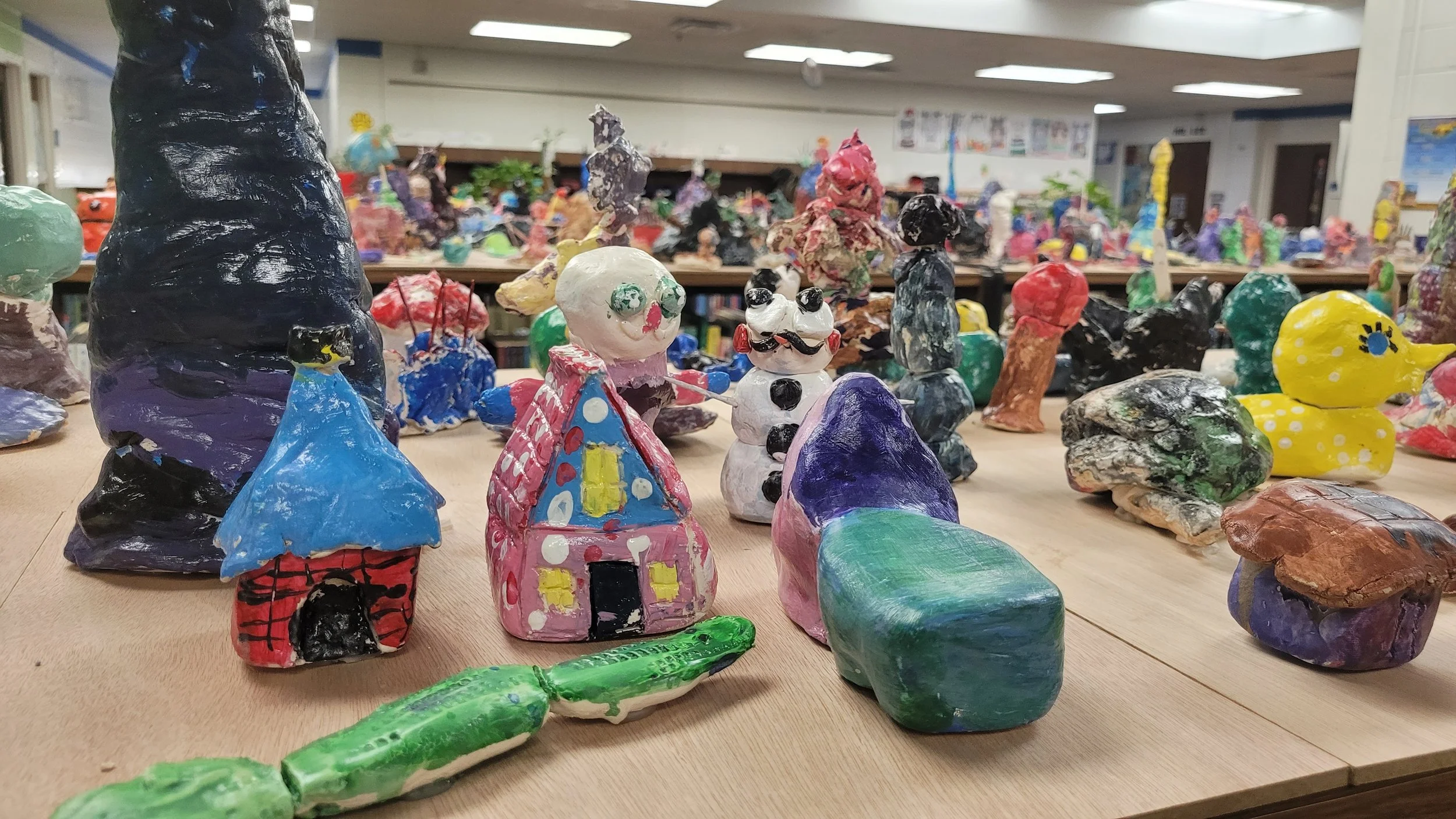
The residency works for grades K-12 and can include 3-5 sessions.
A typical 3 session residency would include:
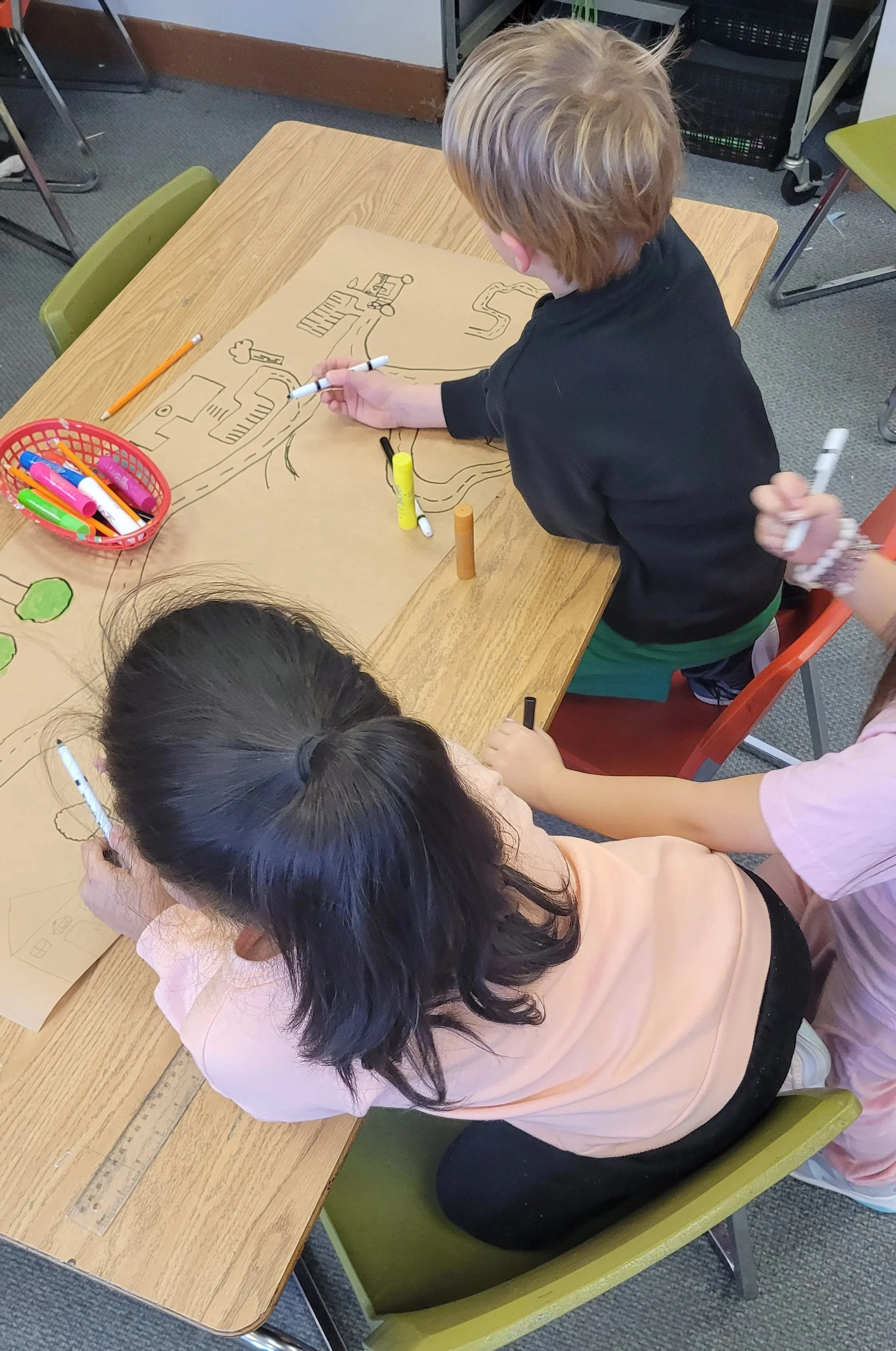
Session 1: Collective brainstorm and city drawings
Session 2: Building city pieces out of clay
Session 3: Painting clay city pieces
CLAY CITY Residency is flexible to adaptation depending on current student curriculum and learning goals. Other possibilities include:
Increasing the number of clay and painting sessions
Including a “city building” day where students help arrange the city
More brainstorming and planning around elements in the city
Adding a creative writing element
Objective:
Brainstorm what makes their community unique and imagine what a city in the future could be
Creative collective city drawings
Session 1:
Teaching Artists introduce students to the idea of CLAY CITY before spending time brainstorming as a group. This is a chance to get students thinking big! As a group, Teaching Artists prompt students to reflect on their current community, asking them what they notice about their neighborhood and city as a whole. Students then spent time exploring fantastical ideas about what a city could be.
Once students' creative fires are lit, in small groups students take those ideas and put them to paper as they draw a collective idea of a city. Students end by giving their cities a name and sharing them with the class. Teaching Artists let students know the next week they will be taking their ideas and turning them into clay, encouraging students to continue thinking about what they may want to make for the collective city.
Objective:
Learn basic clay techniques
Create clay pieces for a collective city
Session 2

After spending time ruminating more about what they’d like to build, students bring their ideas to life in clay. Air dry clay isn’t the easiest to work with, so students learned a number of tips and tricks for how to best work with clay.
The majority of this session is spent working with clay, both with their hands and with a variety of clay tools. Students often need to revise their original plans in the face of challenges. Students can work independently or with others.
Students create a variety of different pieces including: stores, homes, skyscrapers, animals, humans, infrastructure, and more.
Objective:
Paint clay pieces and finalize city details
Session 3
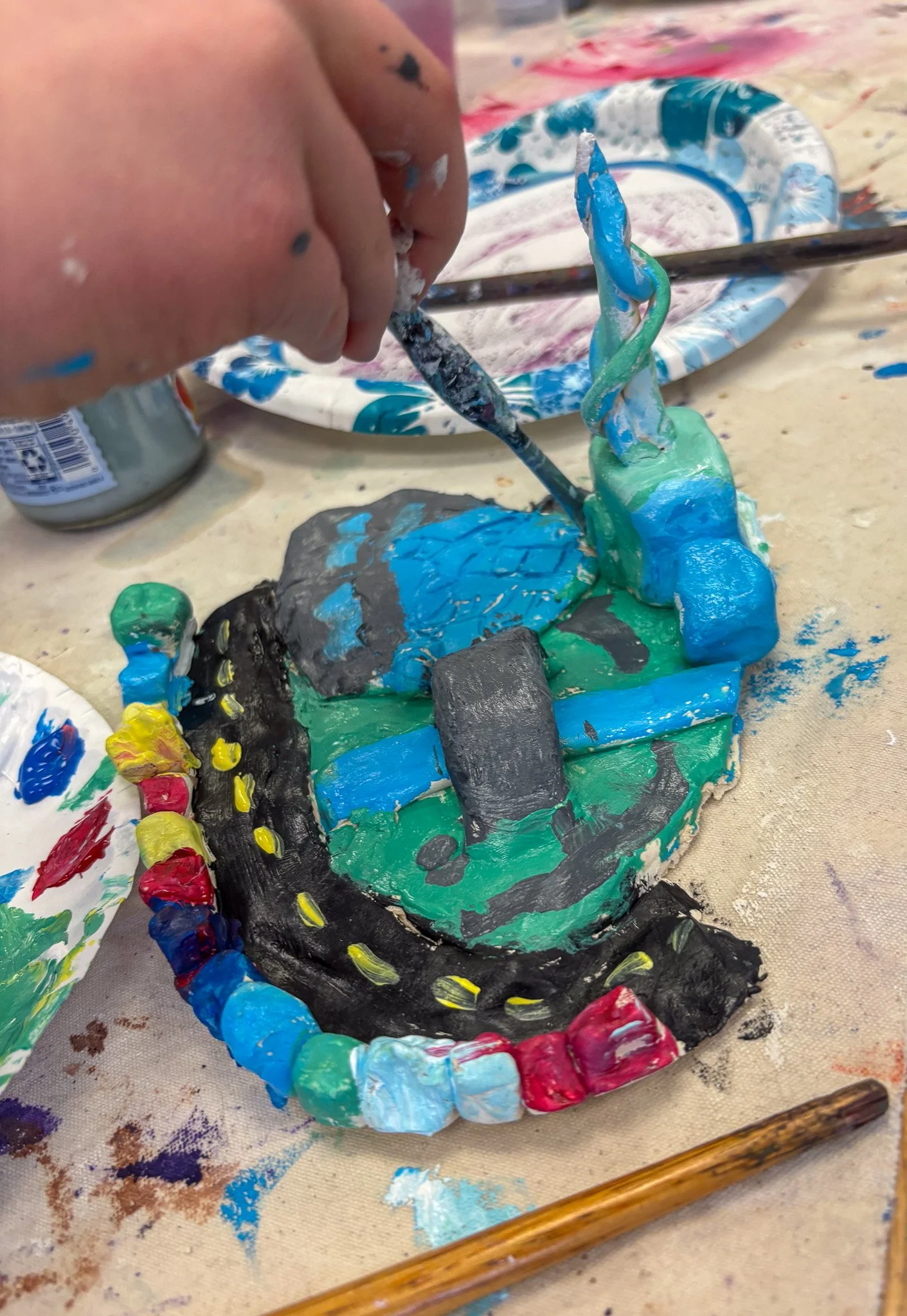
After the students’ creations had time to dry, it’s color! Teaching Artists give a brief lesson about watercolor techniques. For younger students, using watercolor allows them to focus on fully coating their pieces with color. Older students use watercolor as a base and add acrylic paint for detail work.
Watercolor goes onto the clay pastel, but once a protective clear coat is added the colors pop!
Students that finish early can help others students or begin creating a blueprint for the final city.
Post sessions
Teaching artists clear coat all of the pieces for durability. The pieces are added to 6x6 square wooden bases that can be displayed together to showcase the whole city or individually depending on space. Teaching Artists can arrange the pieces for display as needed.
The Residency can culminate in a final walk-through from each class to see and experience the full collective city. The city remains at the school for display or for students to take their individual pieces home.


